
Do I Need an ACC Claim Number Before Seeing a Physio?

No. You can usually see a physio first.
If you’ve had an accident or injury in New Zealand, you don’t normally need to already have an ACC claim number before seeing a physiotherapist.
NO ACC CLAIM NUMBER YET?
That’s okay. An ACC-registered physio can assess your injury and, when appropriate, lodge an ACC claim for you.
You also don’t normally need a GP referral before seeing a physio for an ACC injury.
ALREADY HAVE AN ACC CLAIM?
If your injury has already been registered with ACC, bring your ACC claim number to your appointment if you have it.
WHAT INJURIES MAY BE COVERED?
ACC may cover injuries caused by an accident or specific event, including:
• Sports injuries
• Back injuries
• Shoulder injuries
• Knee injuries
• Ankle sprains
• Muscle strains
WHAT DOES ACC PAY?
ACC pays part of the treatment cost. Usually, physio clinics will charge a surcharge.
Looking for an ACC physio in Central or West Auckland? We provide injury assessment, pain relief and rehabilitation.
Shoulder Pain After an Injury — Should I See a Physio?

If you have shoulder pain after an injury, a physio assessment can help identify the problem and guide your recovery.
Common Shoulder Injuries
Shoulder injuries can happen after a fall, sports injury, lifting injury, sudden pull or accident.
Common problems include muscle strains, ligament sprains, rotator cuff injuries and joint injuries.
When Should I See a Physio?
See a physiotherapist if you have shoulder pain, swelling, weakness, reduced movement or difficulty lifting your arm after an injury.
How Can Physio Help?
Assess the Injury: A physio can check your shoulder movement, strength and symptoms.
Pain Relief: Treatment may include manual therapy and exercises to help manage pain and stiffness.
Rehabilitation: Targeted exercises can restore movement, strength and help you return to work, sport and daily activities.
Severe pain, obvious deformity or inability to move your arm may require urgent medical assessment.
Is My Shoulder Injury Covered by ACC?
If your shoulder injury happened because of an accident or specific event, it may be covered by ACC. You normally don’t need a GP referral. An ACC-registered physio can assess your injury and lodge a claim when appropriate.
ACC pays part of the treatment cost. Usually, physio clinics will charge a surcharge.
Looking for an ACC physio in Central or West Auckland? We provide shoulder injury treatment, sports injury rehabilitation and pain relief.
How Soon Should I Start Physio After an Injury?

In many cases, you can see a physiotherapist soon after an injury. Early assessment can help identify the problem, manage pain and swelling, and guide you safely through recovery.
Why See a Physio Early?
Early Assessment: A physio can assess your pain, movement, strength and function to understand the injury.
Pain & Swelling Management: Early treatment may include gentle movement, hands-on therapy and advice to help manage symptoms.
Prevent Stiffness & Weakness: Staying inactive for too long can lead to reduced movement and muscle weakness. Your physio can advise when and how to start moving safely.
Start Rehabilitation: As your injury improves, targeted exercises can gradually rebuild strength, mobility and confidence.
When Should I Get Checked?
Consider seeing a physio if you have persistent pain, swelling, difficulty walking, reduced movement or weakness after an accident or sports injury. Severe pain, major swelling, deformity or inability to bear weight may require urgent medical assessment.
Can ACC Cover My Injury?
If your injury happened because of an accident or specific event, it may be covered by ACC. You normally don’t need a GP referral. An ACC-registered physio can assess your injury and lodge a claim when appropriate.
ACC pays part of the treatment cost. Usually, physio clinics will charge a surcharge.
Looking for an ACC physio in Central or West Auckland? We provide sports injury treatment, pain relief, rehabilitation, back injury, knee injury, shoulder injury, sprains and strains.
How Long Does Sports Injury Recovery Take?

Recovery from a sports injury depends on the type and severity of the injury. Mild injuries may recover within a few weeks, while serious ligament injuries or fractures can take several months. Early physiotherapy helps reduce pain, restore movement, and speed up recovery.
General Recovery Timeline
Mild sprains & strains
Minor muscle pulls and ankle sprains usually recover within 1–3 weeks with appropriate treatment.
Moderate injuries
Muscle tears, tendon injuries, and stress fractures generally take 4–12 weeks to heal.
Severe injuries
Major ligament injuries, fractures, or post-surgical rehabilitation may require 6–12 months before returning to full activity.
The Three Recovery Stages
Acute Care
During the first 24–72 hours, focus on reducing pain and swelling with rest, ice, gentle movement, and professional assessment.
Mobility & Strength
As pain settles, physiotherapy helps restore joint mobility, muscle strength, balance, and flexibility through personalised rehabilitation exercises.
Return to Sport
Sport-specific exercises are gradually introduced to improve confidence, performance, and reduce the risk of re-injury before returning to full activity.
Early assessment often leads to faster recovery and better long-term results.
If you’re looking for a physio in Central or West Auckland, our experienced team provides ACC physio, sports injury rehabilitation, pain relief, lower back pain, neck pain, shoulder pain, sprains, strains, and post-injury recovery.
What Happens During Your First Physio Appointment?
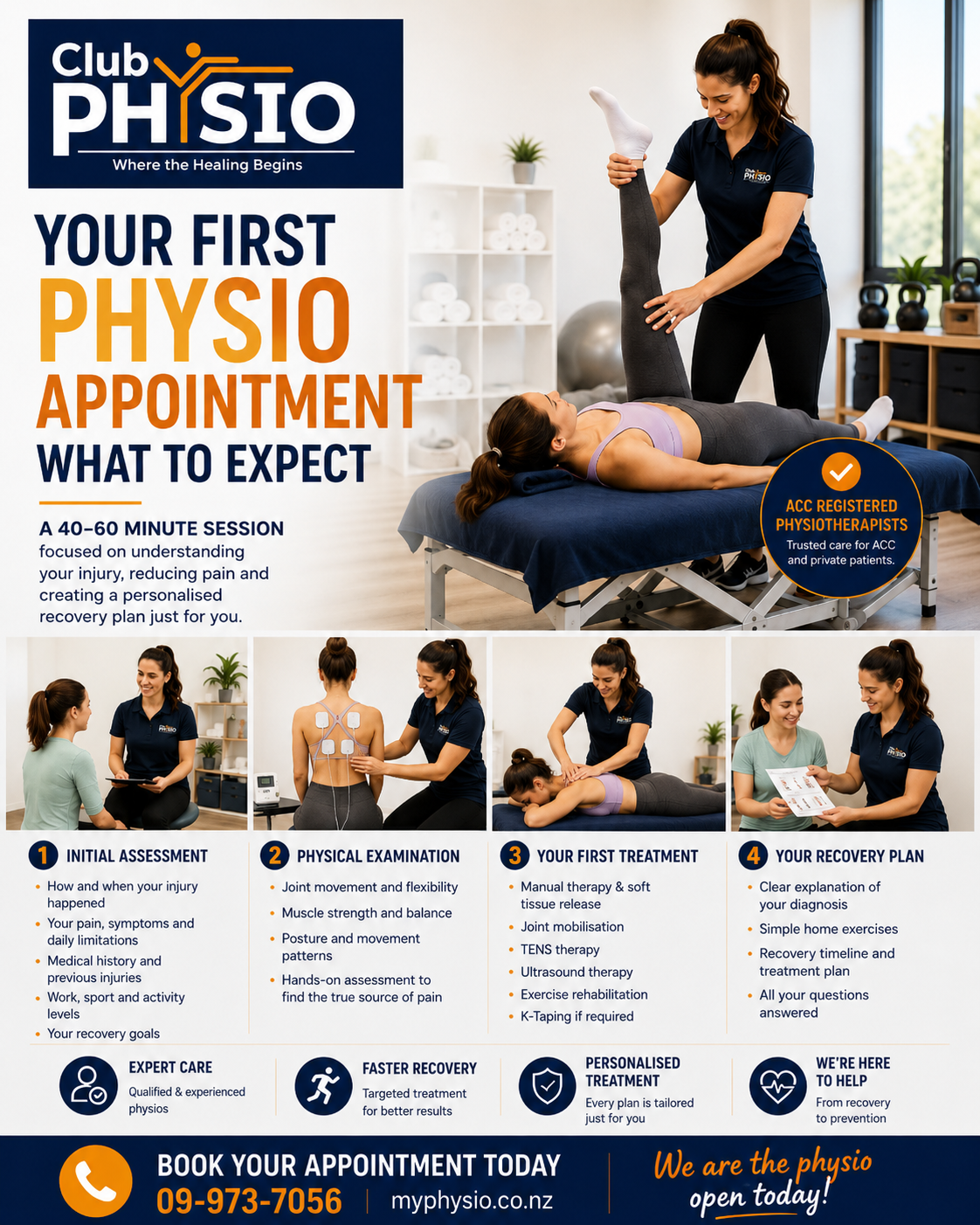
Your first physiotherapy appointment is designed to identify the cause of your pain and create a personalised treatment plan to help you recover safely and efficiently.
1. Initial Assessment
Your physiotherapist will discuss:
- How and when your injury happened
- Your pain, symptoms, and daily limitations
- Your medical history and previous injuries
- Your work, sport, and activity levels
- Your recovery goals
2. Physical Examination
Your physio will assess:
- Joint movement and flexibility
- Muscle strength and balance
- Posture and movement patterns
- The injured area using hands-on assessment
This helps identify the root cause of your pain rather than simply treating the symptoms.
3. Your First Treatment
Depending on your condition, treatment may include:
- Manual therapy
- Soft tissue massage
- Joint mobilisation
- TENS therapy
- Ultrasound therapy
- Exercise rehabilitation
- K-Taping if required
4. Your Recovery Plan
Before you leave, your physiotherapist will explain your diagnosis, provide simple home exercises, discuss your recovery timeline, and answer any questions.
If you’re looking for a physio in Central or West Auckland for ACC physio, sports injuries, rehabilitation, lower back pain, neck pain, shoulder pain, sprains, strains, or pain relief, we’re here to help.
How Does ACC Physiotherapy Work in New Zealand?
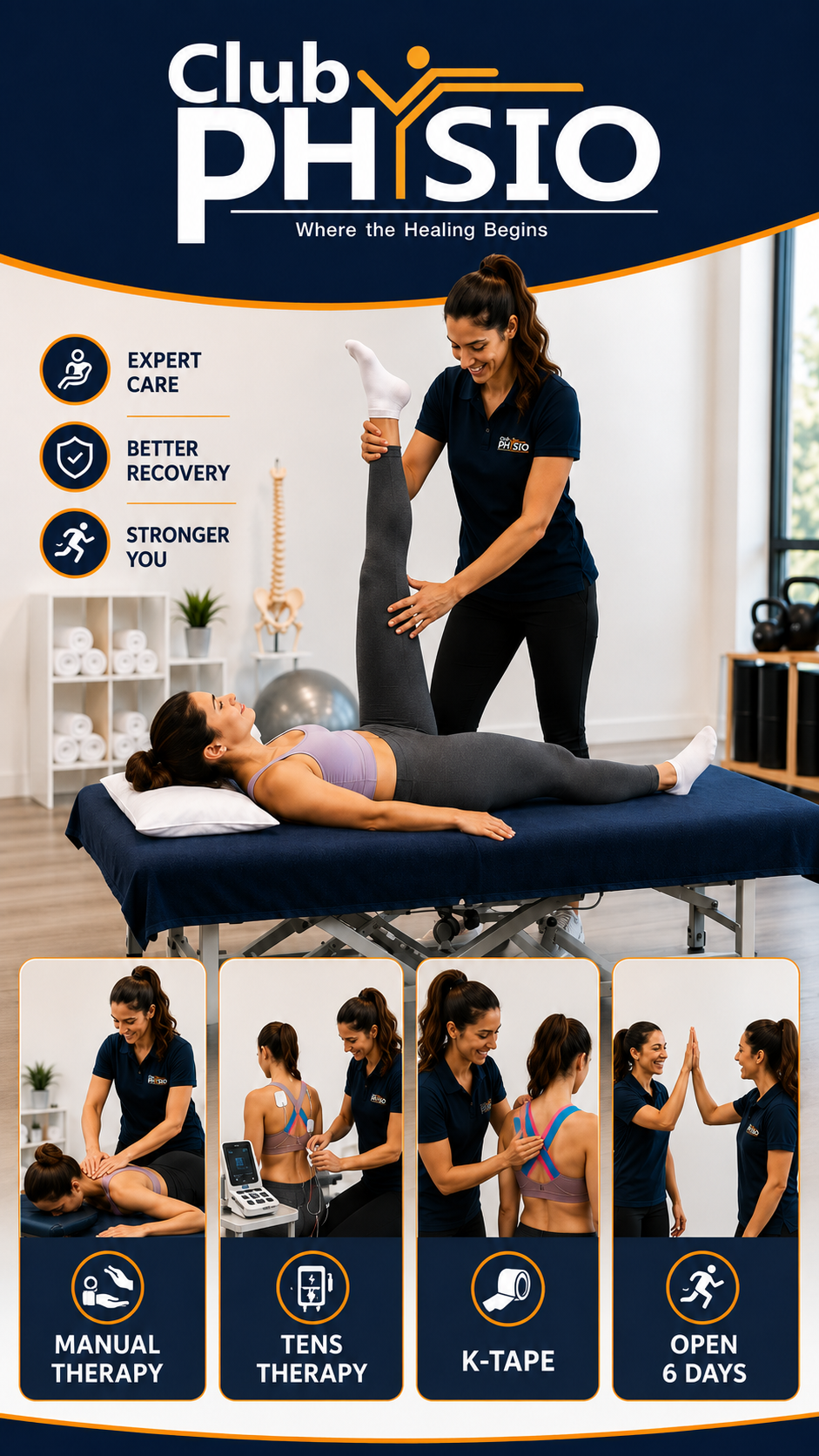
ACC is New Zealand’s no-fault injury cover scheme. If you have a physical injury caused by an accident, ACC may help pay part of your physiotherapy treatment costs.
No GP Referral Needed
You can book directly with an ACC-registered physiotherapist. During your first appointment, the physio can assess your injury and lodge an ACC claim if appropriate.
What Happens Next?
ACC reviews the claim and confirms whether the injury is covered. Treatment may begin while the claim is being processed.
What Will You Pay?
ACC usually contributes toward treatment rather than covering the full clinic fee. You may need to pay a surcharge. Fees vary between clinics, commonly around $25–$75, so confirm the cost when booking.
What Injuries May Be Covered?
ACC commonly covers accident-related sprains, strains, fractures, dislocations, sports injuries, falls, and sudden lifting injuries. Some work-related gradual injuries may also qualify, but general illness and age-related conditions are usually not covered.
If you already visited a GP, bring your ACC claim number to your physio appointment.
If you’re looking for a physio in Central or West Auckland, including ACC physio, sports injury rehabilitation, pain relief, lower back pain, neck pain, shoulder pain, sprains, strains, or accident injuries, our team is here to help.
Do I Need a GP Referral to See a Physiotherapist?
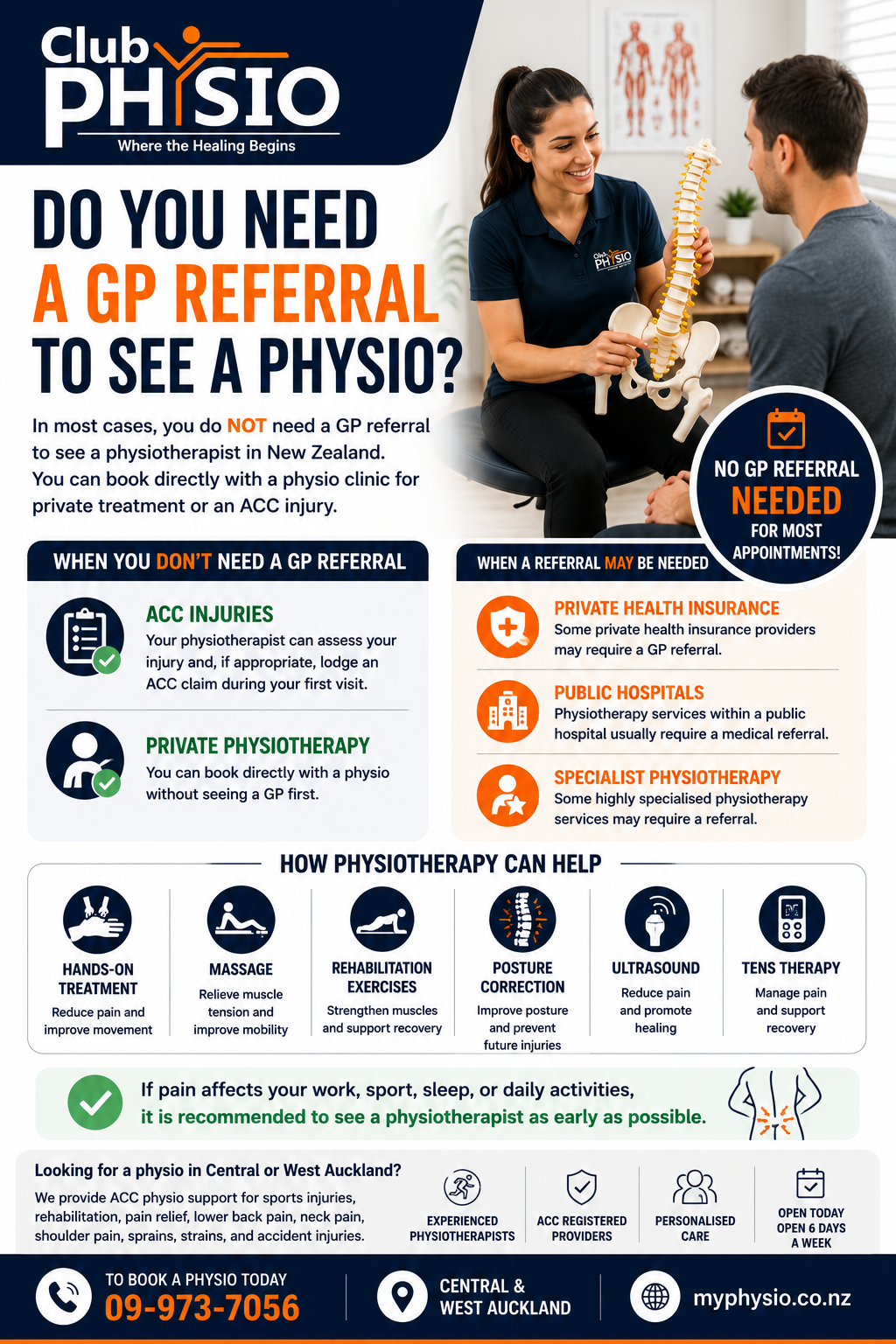
In most cases, you do not need a GP referral to see a physiotherapist in New Zealand. You can book directly with a physio clinic for private treatment or an ACC injury.
When You Don’t Need a GP Referral
ACC Injuries
Your physiotherapist can assess your injury and, if appropriate, lodge an ACC claim during your first appointment.
Private Physiotherapy
You can book directly without seeing a GP first.
When a Referral May Be Needed
• Some private health insurance providers may require a GP referral.
• Public hospital physiotherapy services usually require a medical referral.
• Some specialist physiotherapy services may also require a referral.
How Physiotherapy Can Help
Physiotherapists can assess your injury and provide hands-on treatment, massage, rehabilitation exercises, posture correction, ultrasound, TENS therapy, and recovery plans.
If pain affects your work, sport, sleep, or daily activities, it is recommended to see a physiotherapist as early as possible.
If you’re looking for a physio in Central or West Auckland, including ACC physio support for sports injuries, rehabilitation, pain relief, lower back pain, neck pain, shoulder pain, sprains, strains, or accident injuries, our team is here to help.
How to Prevent Lower Back Pain at Work
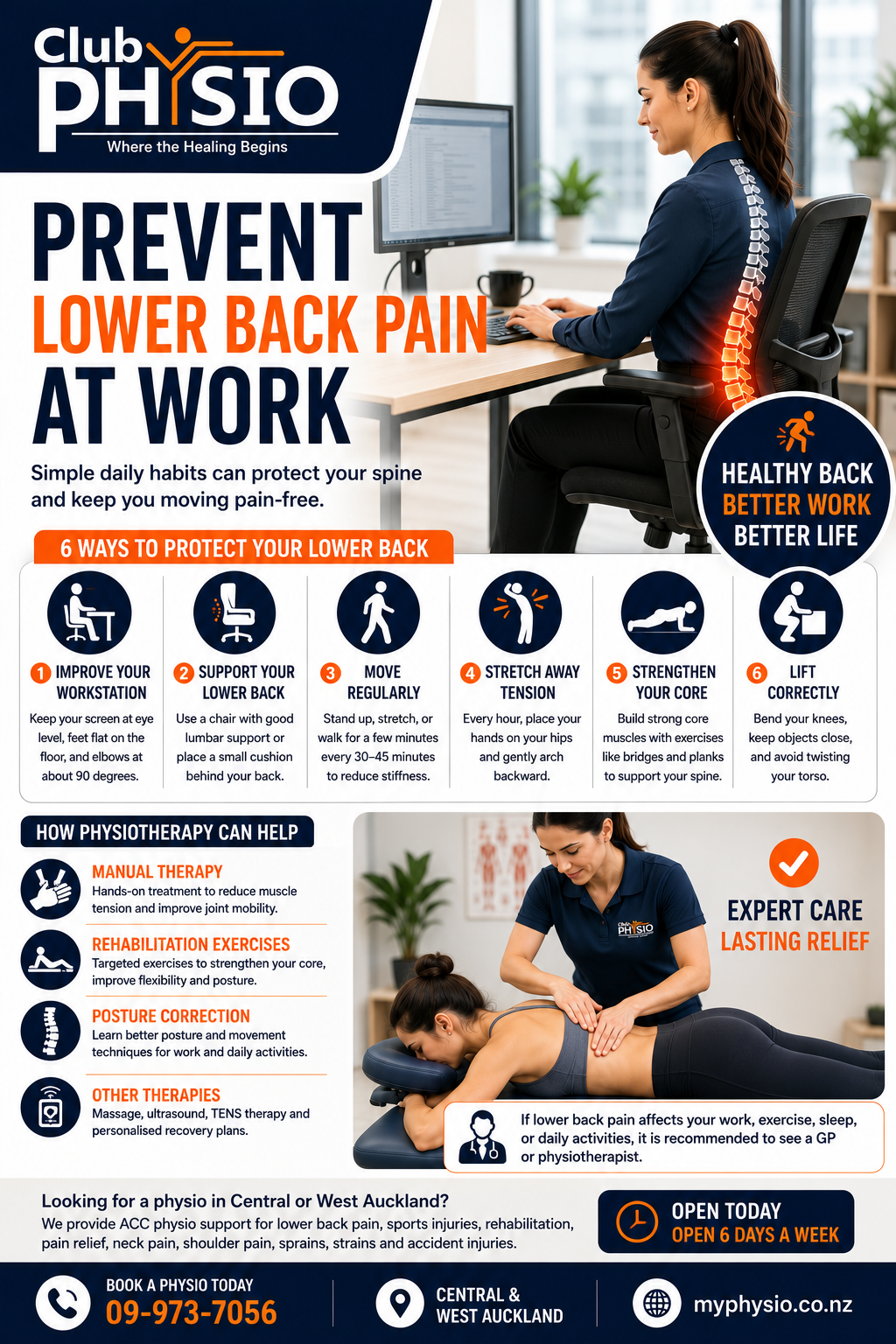
Lower back pain at work is commonly caused by prolonged sitting, poor posture, repetitive movements, and incorrect lifting. Small changes to your daily habits can greatly reduce your risk of back pain.
How to Protect Your Back
Improve Your Workstation
Keep your screen at eye level, your feet flat on the floor, and your elbows relaxed at about 90 degrees.
Support Your Lower Back
Use a chair with good lumbar support or place a small cushion behind your lower back.
Move Regularly
Stand up, stretch, or walk for a few minutes every 30–45 minutes to reduce stiffness.
Strengthen Your Core
Exercises such as bridges and planks help improve spinal stability and reduce strain.
Lift Correctly
Bend your knees, keep objects close to your body, and avoid twisting while lifting.
How Physiotherapy Can Help
Physiotherapists can help through hands-on treatment, massage, rehabilitation exercises, posture correction, ultrasound, TENS therapy, and recovery plans.
If lower back pain affects your work, exercise, sleep, or daily activities, it is recommended to see a GP or physiotherapist.
If you’re looking for a physio in Central or West Auckland, including ACC physio support for lower back pain, sports injuries, rehabilitation, pain relief, neck pain, shoulder pain, sprains, strains, or accident injuries, our team is here to help.
What Is Sciatica and How Can Physiotherapy Help?
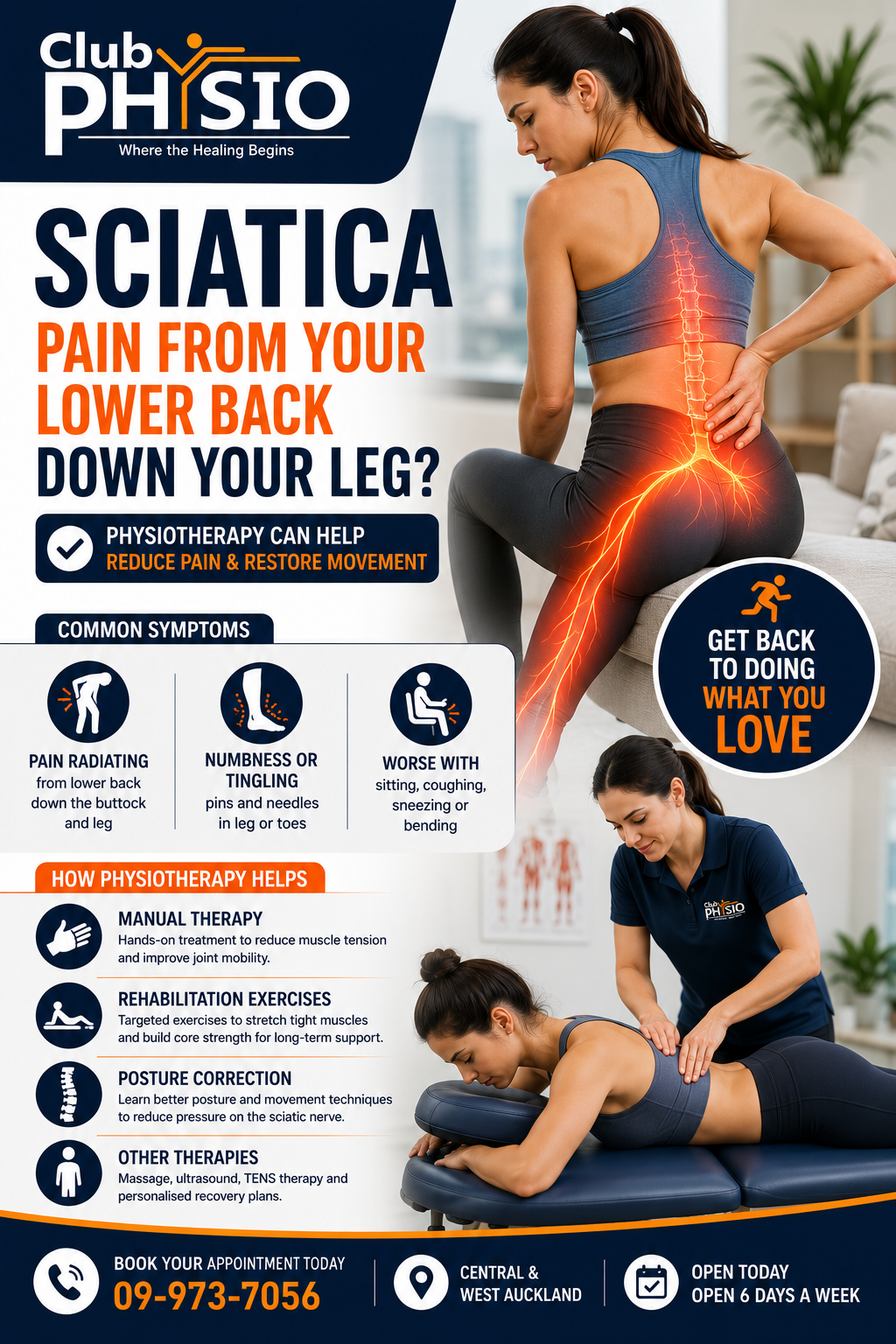
Sciatica is pain that travels from the lower back through the buttock and down one leg. It is usually caused by irritation or compression of the sciatic nerve and can affect daily activities.
Common Symptoms
• Pain from the lower back into the leg
• Tingling or numbness
• Muscle weakness
• Pain when sitting, bending, coughing, or sneezing
How Physiotherapy Can Help
Manual Therapy
Hands-on treatment can reduce muscle tension and improve joint mobility.
Rehabilitation Exercises
Targeted stretching and strengthening exercises help improve movement and support the lower back.
Posture Correction
Learning better sitting, standing, and lifting techniques helps reduce pressure on the sciatic nerve.
Physiotherapists can also use massage, ultrasound, TENS therapy, and personalised recovery plans to support long-term recovery.
If sciatica affects your walking, work, sleep, or daily activities, it is recommended to see a GP or physiotherapist.
If you’re looking for a physio in Central or West Auckland, including ACC physio support for sciatica, lower back pain, sports injuries, rehabilitation, pain relief, neck pain, shoulder pain, sprains, strains, or accident injuries, our team is here to help.
How Poor Posture Causes Neck, Shoulder, and Back Pain
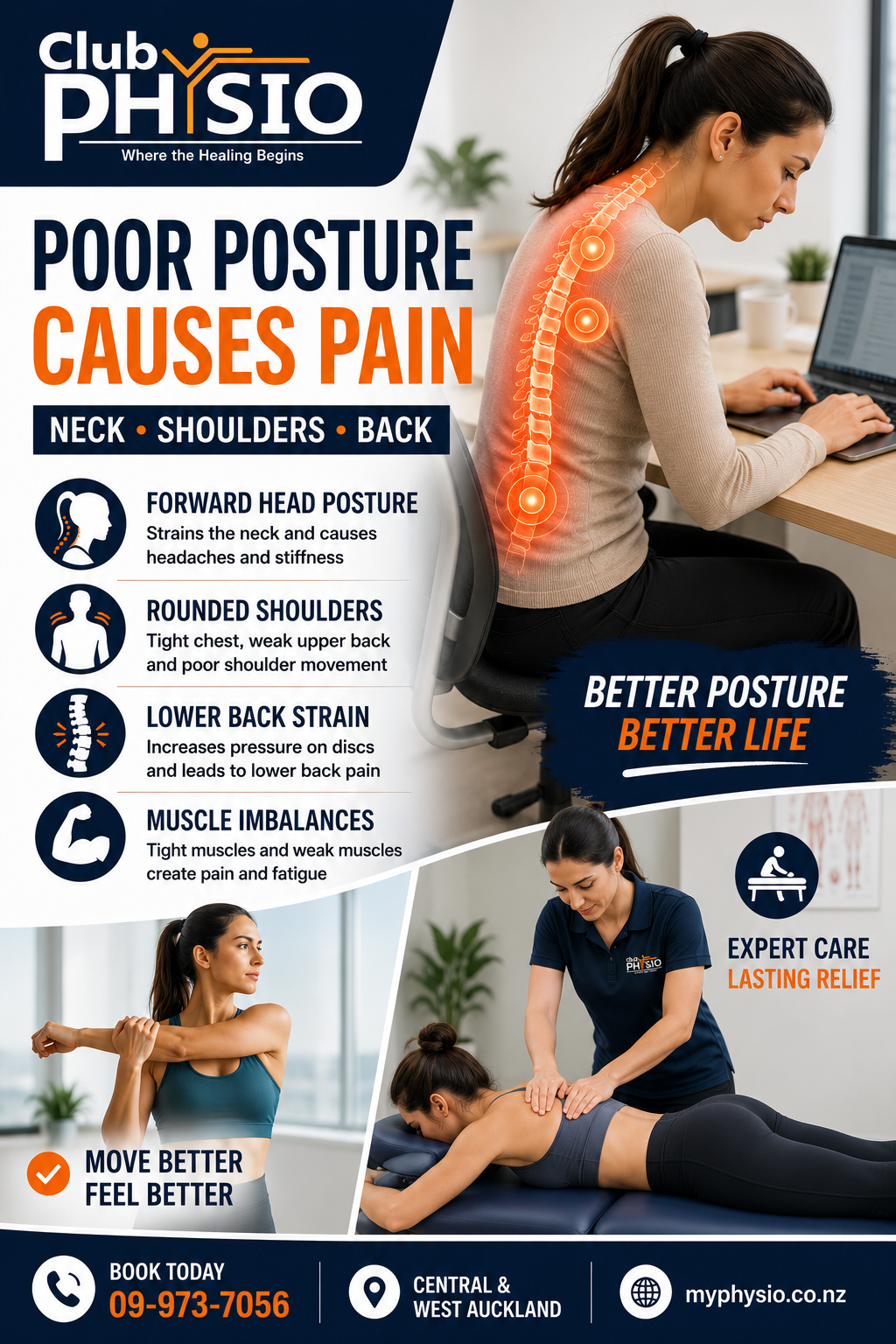
Poor posture places extra stress on your muscles, joints, and spine. Over time, this can lead to neck pain, shoulder pain, lower back pain, stiffness, and reduced mobility.
Common Causes
Forward Head Posture
Looking down at phones or computers for long periods can strain the neck and lead to “tech neck.”
Rounded Shoulders
Slouching tightens the chest muscles and weakens the upper back, causing shoulder pain and poor movement.
Lower Back Strain
Poor sitting and standing posture increase pressure on the lower back and spinal discs.
Muscle Imbalances
Some muscles become tight while others weaken, making it harder to maintain good posture.
How Physiotherapy Can Help
Physiotherapists can help through hands-on treatment, massage, rehabilitation exercises, posture correction, ultrasound, TENS therapy, and recovery plans.
If posture-related pain affects your work, exercise, sleep, or daily activities, it is recommended to see a GP or physiotherapist.
If you’re looking for a physio in Central or West Auckland, including ACC physio support for neck pain, lower back pain, shoulder pain, sports injuries, rehabilitation, pain relief, sprains, strains, or accident injuries, our team is here to help.
How to Prevent Gym and Workout Injuries
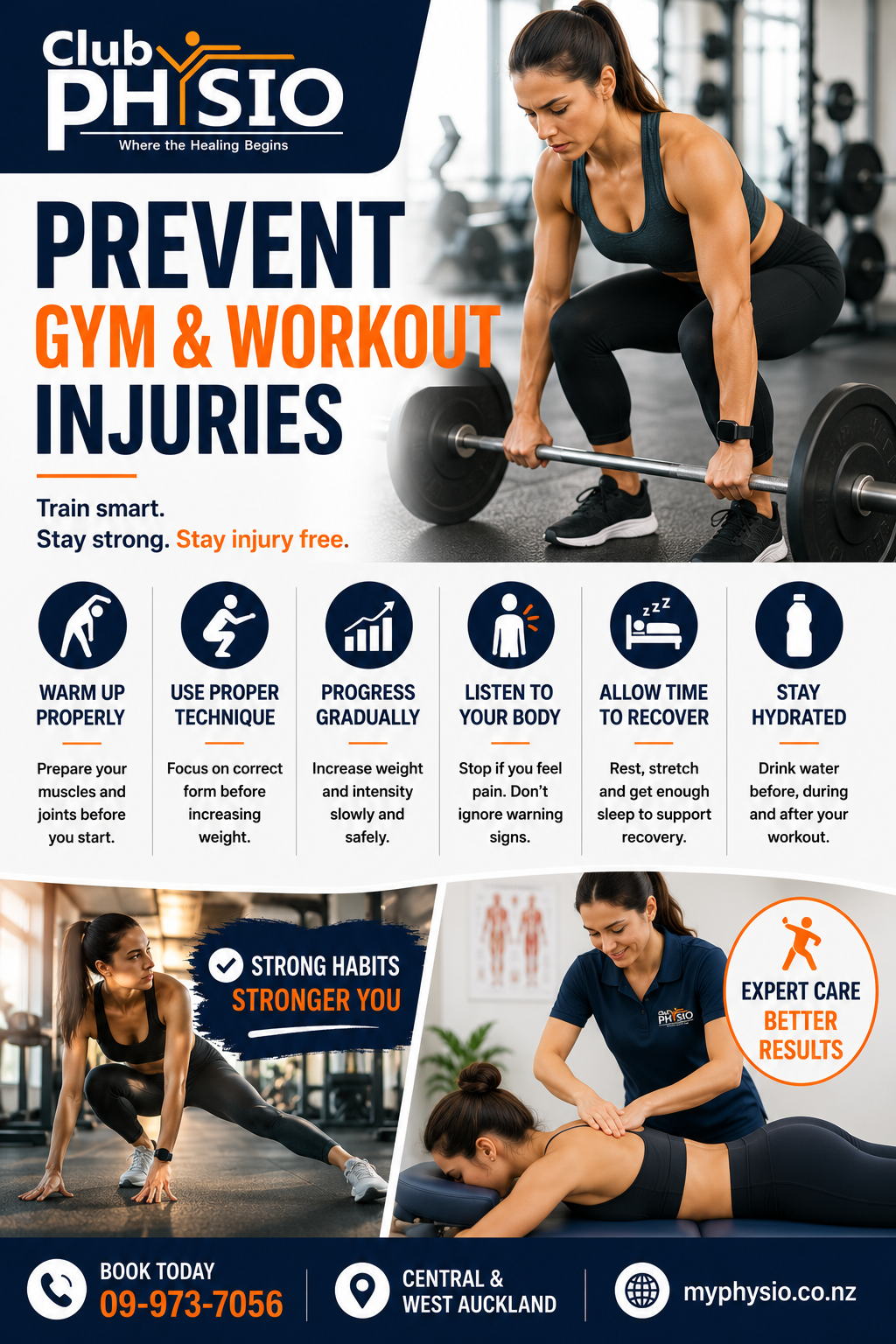
Gym injuries are often caused by poor technique, lifting too much weight, skipping warm-ups, or increasing training too quickly. Simple habits can greatly reduce your risk of injury.
How to Stay Injury Free
Warm Up Properly
Spend 5–10 minutes warming up before exercise to prepare your muscles and joints.
Use Proper Technique
Focus on correct form before increasing weight or intensity.
Progress Gradually
Avoid sudden increases in weight or training volume. Build strength step by step.
Listen to Your Body
Stop if you feel sharp or unusual pain. Don’t ignore warning signs.
Allow Time to Recover
Take rest days, stretch after workouts, and get enough sleep to support recovery.
Stay Hydrated
Drink enough water before, during, and after exercise to reduce muscle fatigue and cramps.
How Physiotherapy Can Help
Physiotherapists can help through hands-on treatment, massage, rehabilitation exercises, posture correction, ultrasound, TENS therapy, and recovery plans.
If pain affects your training, work, or daily activities, it is recommended to see a GP or physiotherapist.
If you’re looking for a physio in Central or West Auckland, including ACC physio support for sports injuries, rehabilitation, pain relief, lower back pain, neck pain, shoulder pain, sprains, strains, or accident injuries, our team is here to help.
How to Prevent Knee Pain While Running or Training

Knee pain is often caused by overtraining, muscle weakness, poor running technique, or doing too much too quickly. The good news is that many running injuries can be prevented.
How to Help Prevent Knee Pain
Increase Training Gradually
Follow the 10% rule and avoid sudden increases in running distance or intensity.
Strengthen Your Legs and Hips
Build strength in your quadriceps, glutes, hamstrings, and core to better support your knees.
Improve Running Form
Avoid over-striding, keep your feet pointing forward, and aim for a natural midfoot landing.
Wear Proper Running Shoes
Replace worn running shoes regularly to maintain support and reduce impact.
Warm Up Before Exercise
Prepare your muscles and joints with light movement before running or training.
How Physiotherapy Can Help
Physiotherapists can help through hands-on treatment, massage, rehabilitation exercises, posture correction, ultrasound, TENS therapy, and recovery plans.
If knee pain affects your work, sport, exercise, or daily activities, it is recommended to see a GP or physiotherapist.
If you’re looking for a physio in Central or West Auckland, including ACC physio support for knee pain, sports injuries, rehabilitation, pain relief, lower back pain, shoulder pain, sprains, strains, or accident injuries, our team is here to help. We’re open today and open 6 days a week.
To book a physio today, contact: 09-973-7056
https://www.myphysio.co.nz
What Causes Neck Pain and Tech Neck?
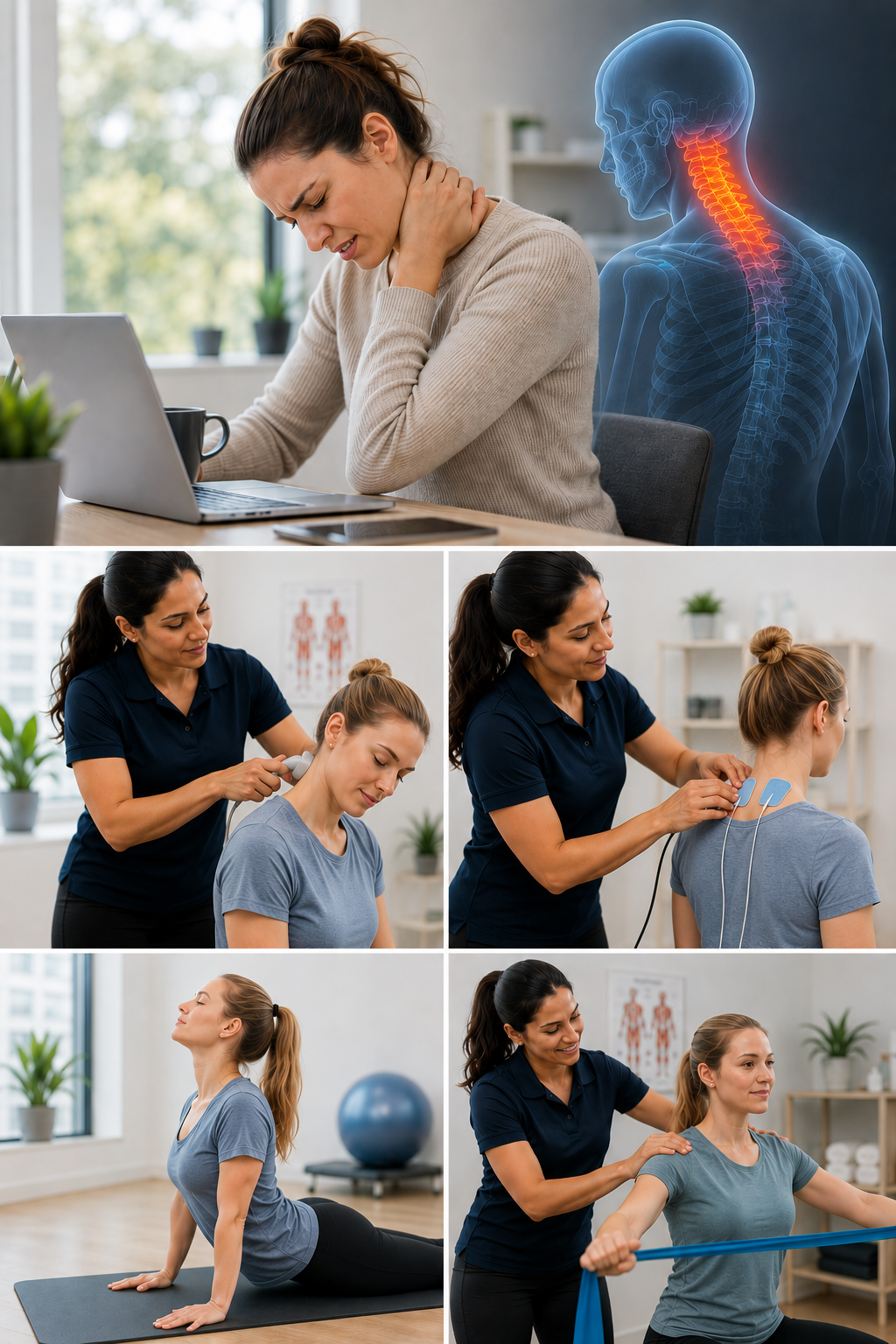
Neck pain and “tech neck” are commonly caused by looking down at phones, tablets, and computers for long periods. Poor posture and prolonged screen use place extra stress on the neck, shoulders, and upper back.
Common Causes
Poor Posture
Looking down at a phone or leaning toward a screen can strain the neck muscles and joints.
Prolonged Screen Time
Holding the same position for long periods can lead to muscle fatigue, stiffness, and discomfort.
Poor Ergonomics
Low computer screens, poor desk setup, and unsupported sitting positions may increase neck strain.
Lack of Movement
Sitting for long periods without stretching or changing position can cause neck and shoulder tightness.
Common Symptoms
• Neck pain and stiffness
• Shoulder and upper back tension
• Reduced neck mobility
• Headaches
• Pain when looking up or turning the head
How Physiotherapy Can Help
Physiotherapists can help through hands-on treatment, massage, rehabilitation exercises, posture correction, ultrasound, TENS therapy, and recovery plans.
If neck pain affects your work, sleep, exercise, or daily activities, it is recommended to see a GP or physiotherapist.
If you’re looking for a physio in Central or West Auckland, including ACC physio support for neck pain, sports injuries, rehabilitation, pain relief, lower back pain, shoulder pain, sprains, strains, or accident injuries, our team is here to help.
Why Does My Lower Back Pain Keep Coming Back?
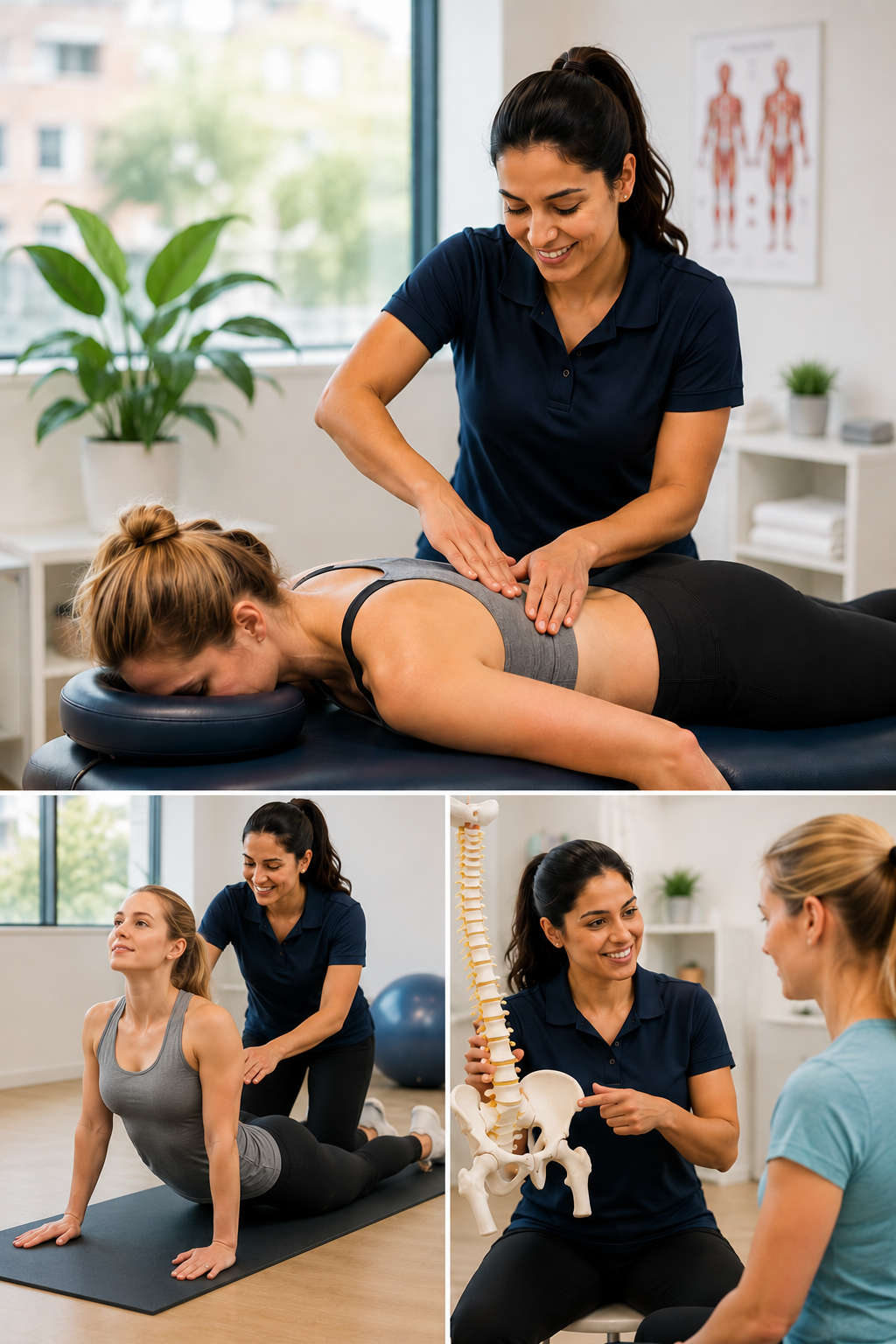
Lower back pain often returns because pain relief is not the same as full recovery. When symptoms improve, many people return to normal activities before the body has fully recovered.
Common Causes
Weak Core and Hip Muscles
Weak core, abdominal, and hip muscles place extra stress on the lower back and reduce spinal support.
Poor Posture and Prolonged Sitting
Long hours sitting at a desk or driving can tighten the hips and increase pressure on the lower back.
Poor Movement Habits
Incorrect lifting, bending, or twisting can overload the lower back and cause repeated flare-ups.
Underlying Conditions
Disc injuries, arthritis, and age-related spinal changes can contribute to ongoing lower back pain.
Stress and Lifestyle Factors
Stress, poor sleep, and lack of regular exercise may increase muscle tension and discomfort.
How Physiotherapy Can Help
Physiotherapists can help identify the cause of recurring lower back pain and provide hands-on treatment, massage, rehabilitation exercises, posture correction, ultrasound, TENS therapy, and recovery plans to improve strength, mobility, and long-term function.
If lower back pain continues to affect your work, exercise, sleep, or daily activities, it is recommended to see a GP or physiotherapist.
If you’re looking for a physio in Central or West Auckland, including ACC physio support for lower back pain, sports injuries, rehabilitation, pain relief, sore neck, shoulder pain, sprains, strains, or accident injuries, our team is here to help.
The Difference Between a Muscle Strain and a Ligament Sprain
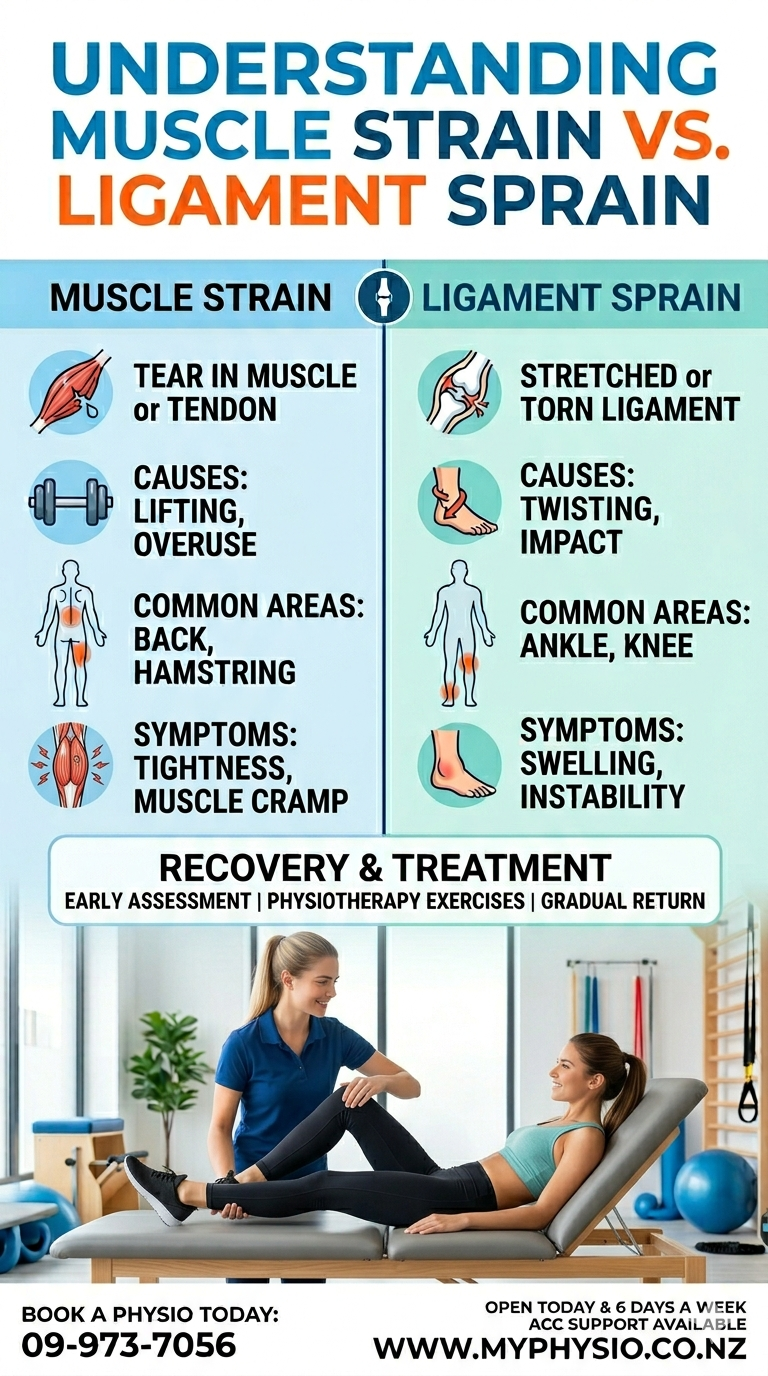
Although strains and sprains are common sports injuries, they affect different tissues and often occur in different parts of the body.
What Is a Muscle Strain?
A muscle strain occurs when a muscle or tendon is overstretched or torn. It is often caused by lifting, overuse, sudden movements, or poor technique.
Common areas include:
• Lower back
• Neck
• Hamstrings
• Calves
• Groin
What Is a Ligament Sprain?
A ligament sprain occurs when a ligament is stretched or torn. It usually happens when a joint twists or moves beyond its normal range.
Common areas include:
• Ankle
• Knee
• Wrist
• Thumb
Common Symptoms
Muscle Strain
• Muscle pain or tightness
• Muscle weakness
• Muscle spasms
• Pain during movement
Ligament Sprain
• Joint pain and swelling
• Bruising
• Joint instability
• Difficulty putting weight on the joint
Treatment
Both injuries benefit from early assessment, activity modification, rehabilitation exercises, and gradual return to activity.
Physiotherapists can help through hands-on treatment, massage, rehabilitation exercises, posture correction, ultrasound, TENS therapy, and recovery plans.
If pain is severe, swelling is significant, or you cannot move or bear weight normally, it is recommended to see a GP or physiotherapist as soon as possible.
If you’re looking for a physio in Central or West Auckland, including ACC physio support for sprains, strains, sports injuries, lower back pain, sore neck, shoulder pain, or accident injuries, our team is here to help.
How to Manage Lower Back Pain
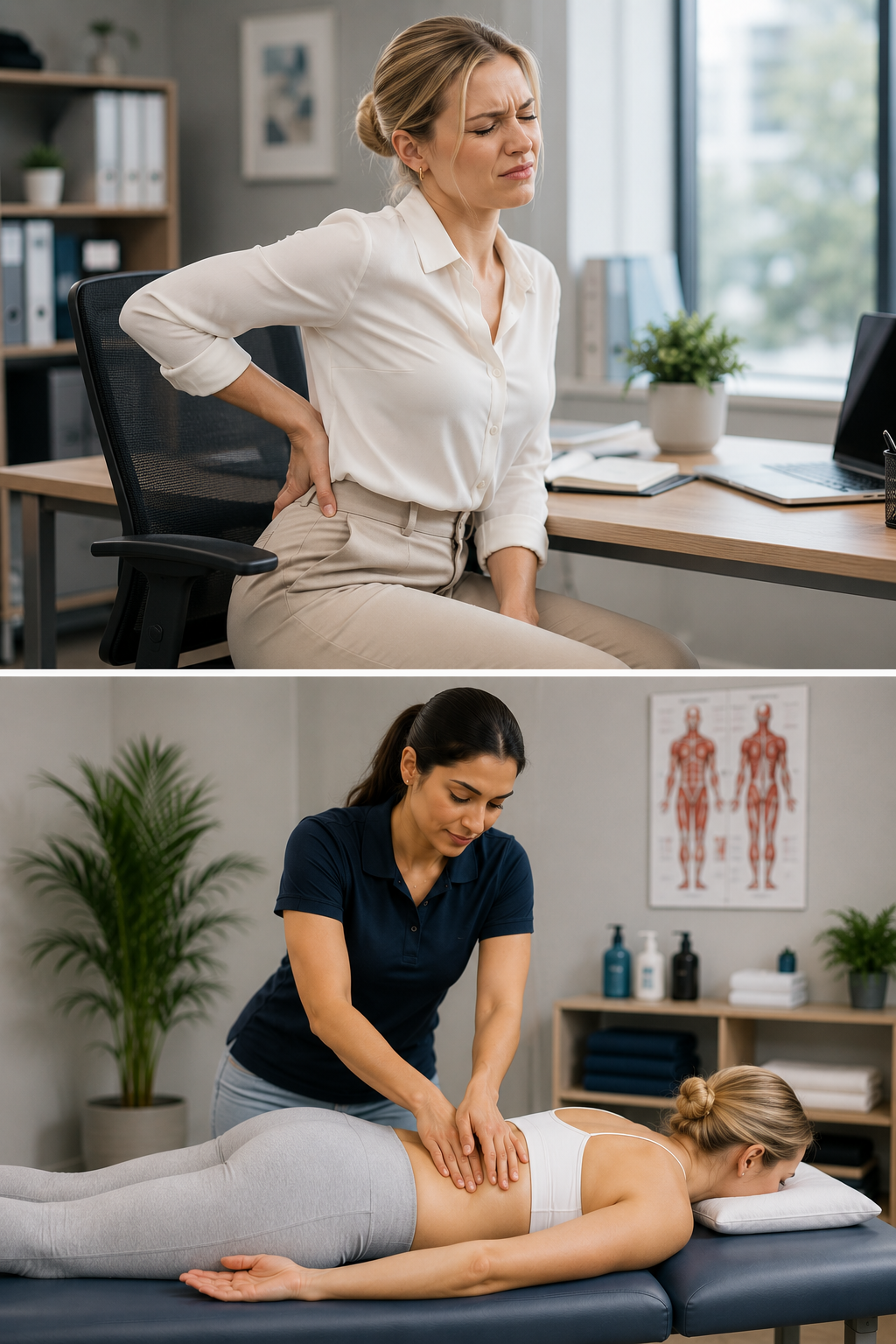
Lower back pain is one of the most common reasons people visit a physiotherapist. Staying active, improving posture, and using simple self-care strategies can help reduce pain and improve recovery.
What Can Help?
• Use heat packs or warm showers to relax tight muscles.
• Stay active with gentle walking and daily movement.
• Avoid prolonged bed rest, which may slow recovery.
• Try gentle stretches to improve flexibility and reduce stiffness.
• Maintain good posture when sitting, standing, and lifting.
Helpful Exercises
• Walking
• Cat-Cow Stretch
• Knee-to-Chest Stretch
• Gentle core strengthening exercises
Long-Term Prevention
• Strengthen your core and glute muscles.
• Use proper lifting techniques.
• Improve workstation and desk setup.
• Take movement breaks every 30–45 minutes.
• Maintain a healthy level of physical activity.
Physiotherapists can help through hands-on treatment, massage, rehabilitation exercises, posture correction, ultrasound, TENS therapy, and recovery plans.
If pain is severe, follows an injury, causes numbness, tingling, weakness, or affects your daily activities, it is recommended to see a GP or physiotherapist.
If you’re looking for a physio in Central or West Auckland, including ACC physio support for lower back pain, sore neck, shoulder pain, accident injuries, or sports injuries, our team is here to help.
What Does a Physiotherapist Actually Do?
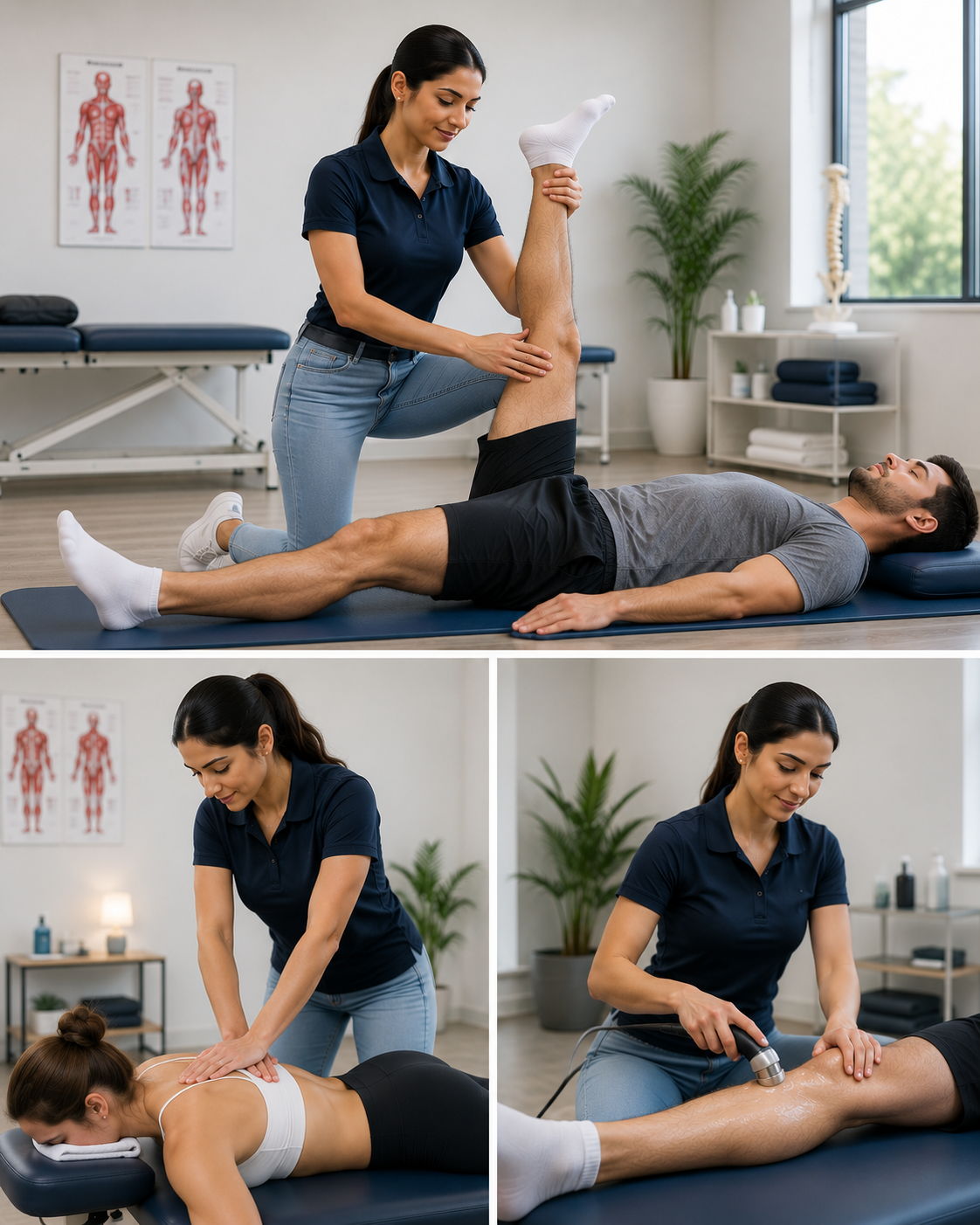
A physiotherapist helps reduce pain, restore movement, improve strength, and prevent future injuries. They assess your condition and create a personalised treatment plan to help you recover safely and effectively.
What Does a Physiotherapist Do?
• Assess pain, movement, strength, flexibility, and joint function.
• Identify the cause of pain or injury.
• Provide hands-on treatment and soft tissue therapy.
• Prescribe rehabilitation exercises to improve strength and mobility.
• Help improve posture and movement patterns.
• Support recovery after sports injuries, accidents, or surgery.
• Provide advice to help prevent future injuries.
Common Conditions Treated
• Lower back pain and neck pain.
• Shoulder, knee, ankle, and hip injuries.
• Sports injuries and muscle strains.
• Sprains, tendon injuries, and joint pain.
• Post-surgical rehabilitation.
• Arthritis and mobility problems.
Physiotherapists can help through hands-on treatment, massage, rehabilitation exercises, posture correction, ultrasound, TENS therapy, and personalised recovery plans.
If symptoms continue to affect your movement or daily life, it is recommended to see a GP or physiotherapist.
If you’re looking for a physio in Central or West Auckland, including ACC physio support for lower back pain, sore neck, shoulder pain, accident injuries, or sports injuries, our team is here to help.
When Should You See a Physiotherapist?
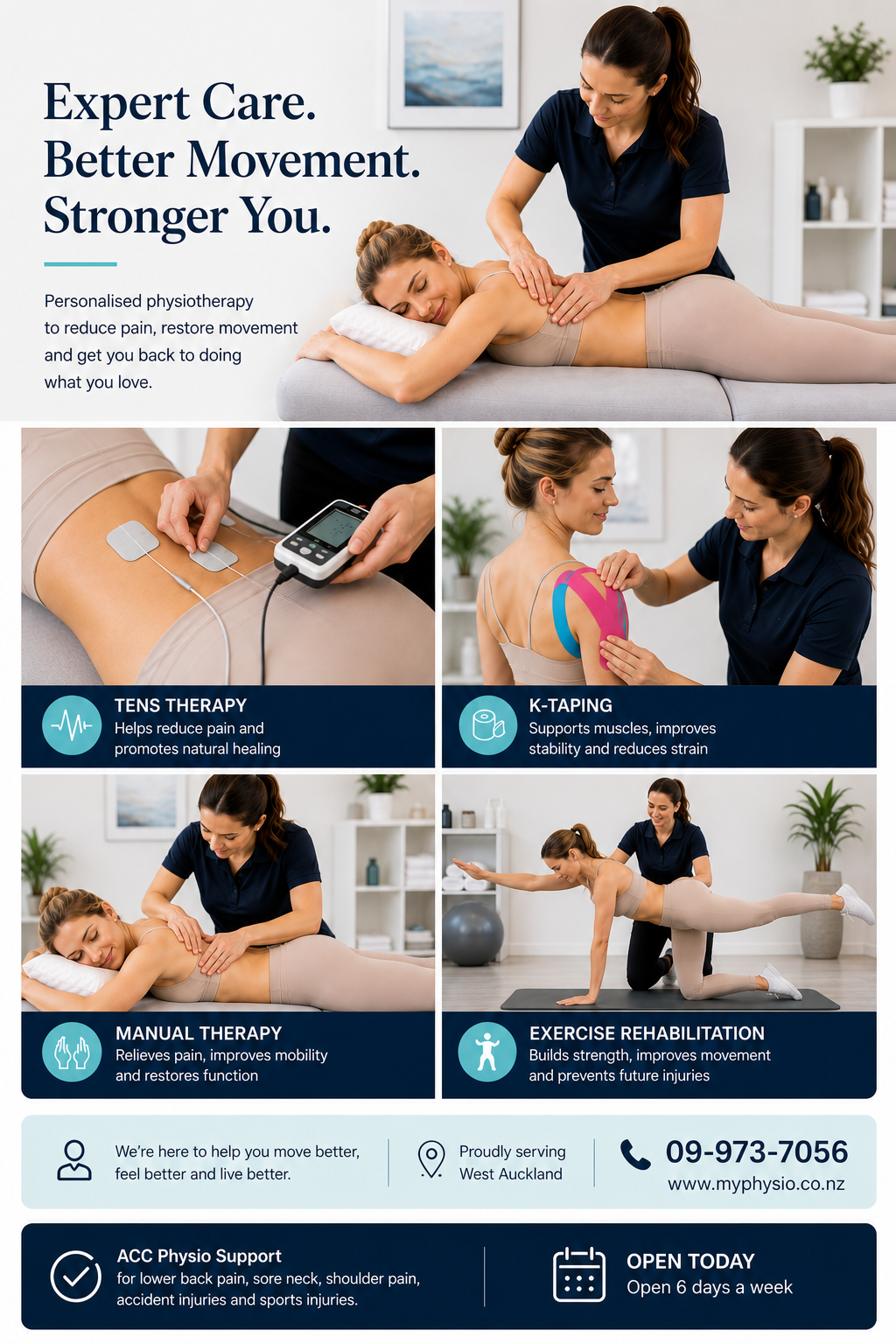
In these situations, you should see a physiotherapist:
• Sports Injuries & Accidents – Sprains, strains, muscle tightness, lifting injuries, twisting injuries, or pain after a fall, car accident, or sudden injury.
• Persistent Pain – Lower back pain, sore neck, shoulder pain, or knee pain that does not improve with rest.
• Mobility Problems – Stiffness, tight muscles, reduced flexibility, or difficulty moving freely and feeling limber.
• Posture & Workplace Strain – Neck tension, sore shoulders, or lower back discomfort from desk work, poor posture, or repetitive movement.
• Recurring Injuries – Pain or injuries that keep returning due to weakness or poor movement patterns.
• Recovery After Injury or Surgery – Rehabilitation after sports injuries, accidents, falls, or operations.
Physiotherapists can help through hands-on treatment, massage, rehabilitation exercises, posture correction, injury management, and supportive treatment equipment such as ultrasound or TENS therapy.
If symptoms continue to affect your movement or daily life, it is recommended to see a GP or physiotherapist as soon as possible for proper assessment and treatment.
If you’re looking for a physio in Central or West Auckland, including ACC physio support for lower back pain, sore neck, shoulder pain, accident injuries, or sports injuries, our team is here to help.
What to Do If You Injure Your Back During Sport

Back injuries can occur suddenly during sports, especially with twisting, lifting, or sudden movements. Acting quickly can help reduce pain and prevent further damage.
Immediate Actions (First 24–48 Hours)
• Stop Activity – Do not continue playing through the pain, as this may worsen the injury.
• Rest – Avoid movements that trigger pain such as bending, twisting, or lifting.
• Ice – Apply an ice pack wrapped in a towel for about 20 minutes at a time, several times a day to help reduce swelling and inflammation.
• Compression & Support – Light support may help reduce discomfort and protect the injured area.
• Gentle Movement – Avoid prolonged bed rest. Light, pain-free movement can help prevent stiffness and support recovery.
Recovery & Rehabilitation
Once the acute pain settles, gentle stretching and controlled exercises can help restore mobility and strengthen the core muscles that support the spine. Gradual strengthening and proper rehabilitation are important before returning to full sports activity.
Seek Medical Help If You Notice
• Pain spreading down one or both legs
• Numbness, tingling, or weakness in the legs
• Severe pain that does not improve after a few days
If symptoms persist or you continue to feel discomfort, it is recommended to see a GP or physiotherapist as soon as possible for proper assessment and timely treatment.
If you’re looking for a physio in Central or West Auckland, including ACC physio support for a sports injury, our team is here to help.